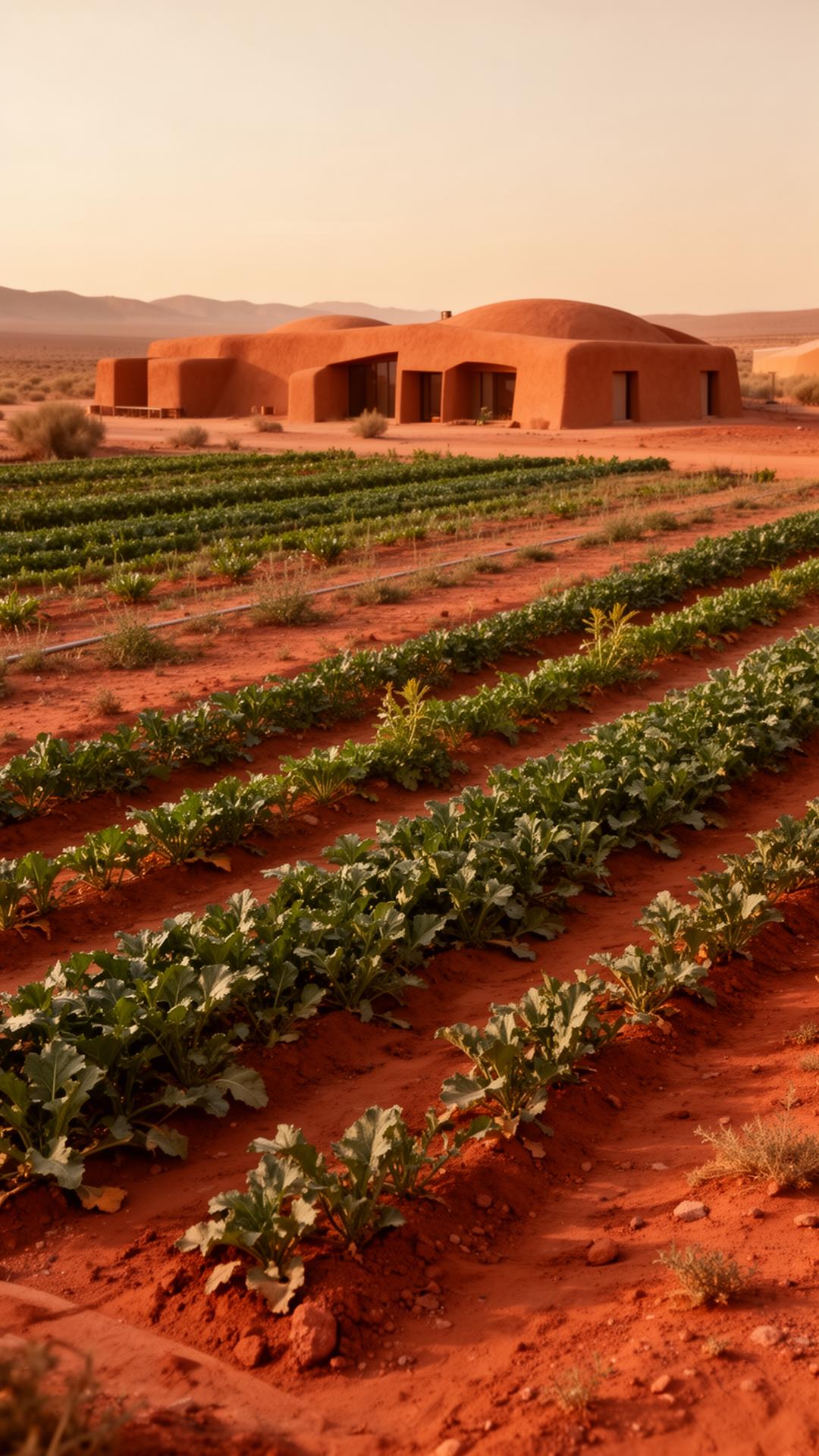
Food
We grow what sustains us.
The Farm is designed around real agriculture: regenerative land use, precision nutrition, livestock, greenhouses, water systems, and food grown for the people who live and work there.
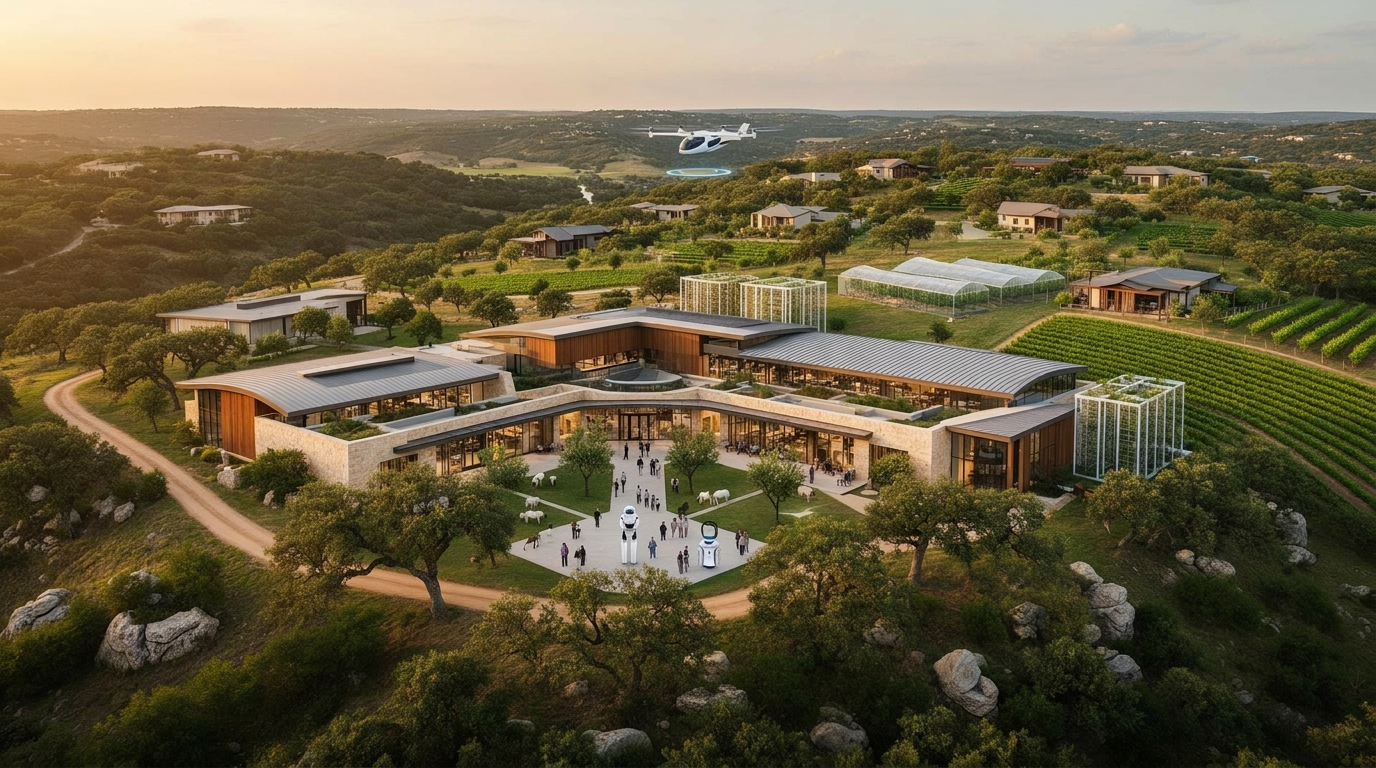
The Commons Farm is a founding-stage initiative to create a living innovation campus — where agriculture, technology, research, education, architecture, and human collaboration are designed as one integrated system.
Now inviting universities, governments, scientists, architects, researchers, builders, and founding partners.
Traditional farms cultivate land, food, and life. The Farm is being designed to cultivate something more: the ideas, systems, technologies, and human environments required for the next era of civilization.
It will bring agriculture, research, design, engineering, education, government, capital, and community into one physical place — where exceptional people can work side by side on problems that matter, over long periods of time.
The most important breakthroughs in history rarely emerged from isolation. They emerged from places.
The Farm is designed around real agriculture: regenerative land use, precision nutrition, livestock, greenhouses, water systems, and food grown for the people who live and work there.
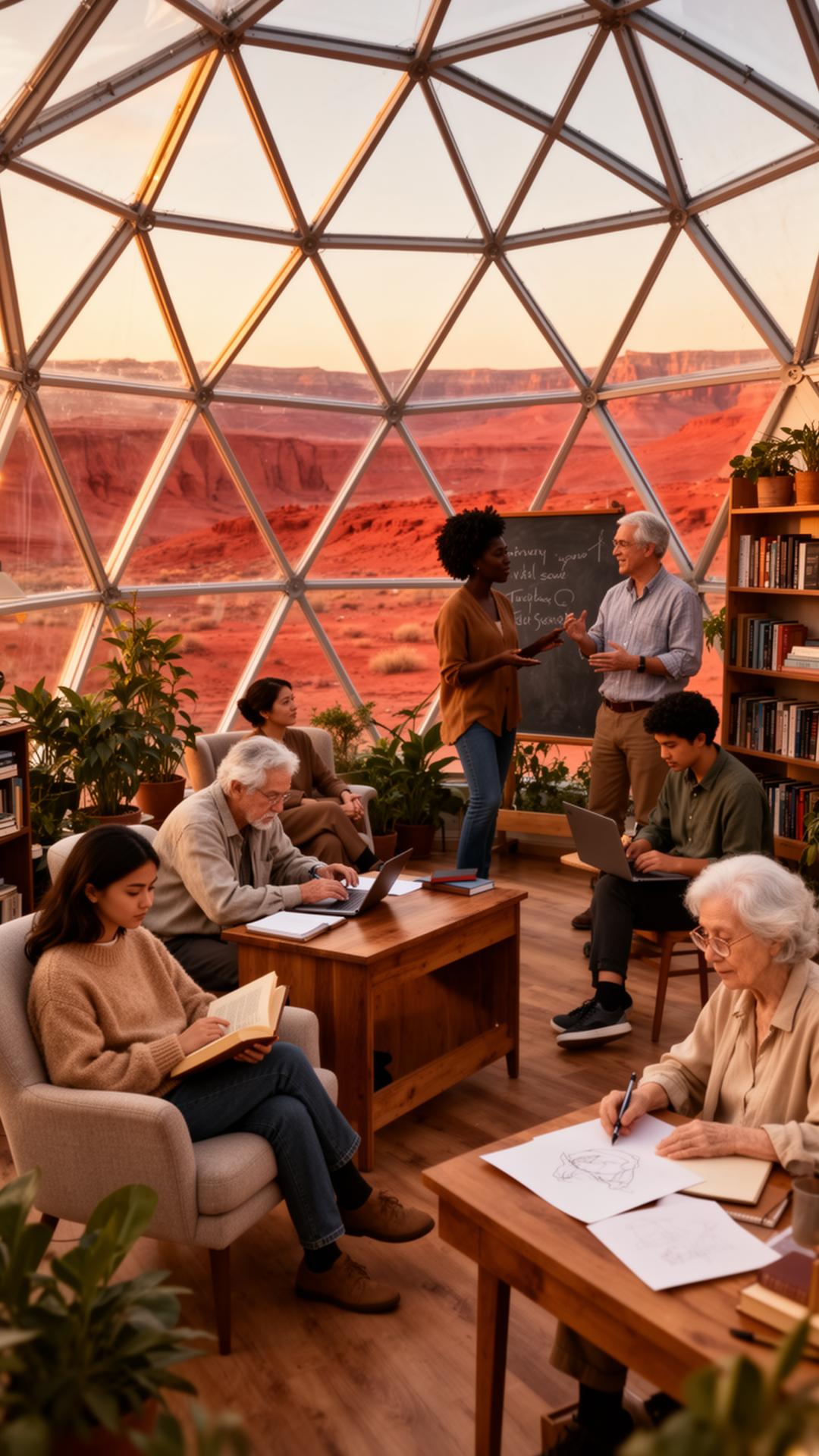
The campus is envisioned as a place where scientists, developers, architects, designers, educators, founders, and governments collaborate physically — not just digitally — on technologies and systems that matter.
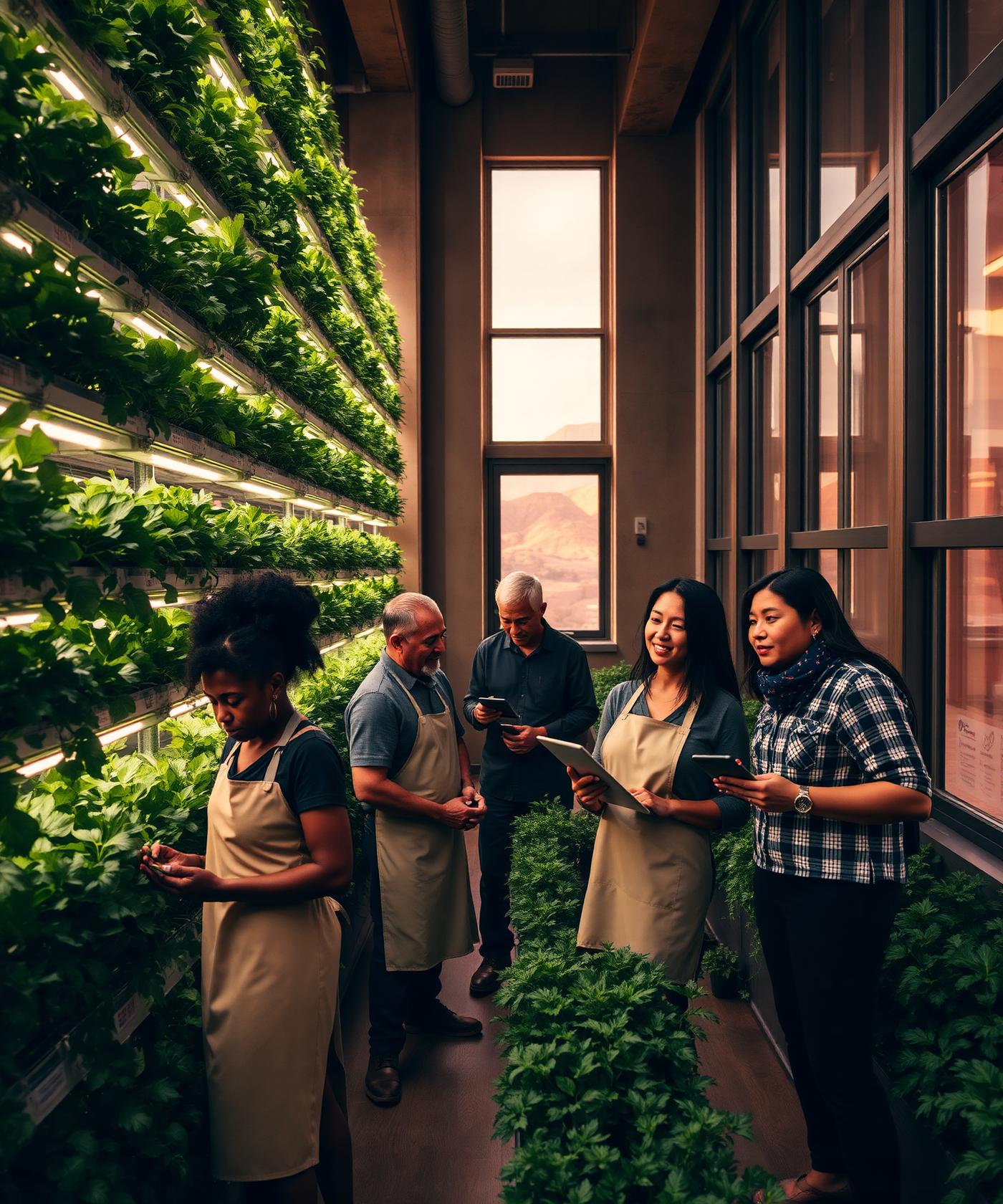
The goal is not only to build one extraordinary place. It is to create tested models that cities, universities, governments, and institutions can adapt and deploy around the world.
The Farm is built on a simple premise: the way people eat, sleep, learn, move, collaborate, recover, and build should not be left to accident.
Food grown on site. Learning shaped around cognitive rhythm. Spaces designed for rest and deep work. Technology embedded quietly into the natural environment. Community treated as infrastructure.
Every system — agriculture, energy, habitation, health, learning, governance — is designed to be studied, improved, and demonstrated. Not as theory. As evidence.
Climate resilience. Food security. Chronic disease. Education failure. Energy transition. Human adaptation to advanced technology. These are not separate challenges — they are connected systems that demand connected solutions.
Solving them requires more than conferences and papers. It requires a place where connected problems can be lived, tested, built, and demonstrated together — over years, not quarters.
The Farm is being designed to be that place.
Bell Labs gathered physicists, mathematicians, engineers, and metallurgists onto a single campus and produced the transistor, the laser, information theory, the Unix operating system, and eight Nobel Prizes. It worked because the people, the disciplines, and the problems shared a place.
Earlier and later analogs — the Medici workshops of Florence, the wartime concentration of talent at Los Alamos, the early decades of MIT's Building 20 — point to the same pattern. Civilizational breakthroughs come from concentrated, multidisciplinary environments held together over long periods of time.
The Farm is being designed in that lineage — for the problems of the next century.
The systems required to sustain human life in the most demanding environments our species will ever inhabit — constrained food production, closed-loop energy, resilient community, long-duration habitation, isolated governance — are the same systems that can transform how we live on Earth today.
Private aerospace is already building the vehicles. The Farm is focused on building the civilizations that travel in them.
Every system tested here — agricultural, architectural, educational, energetic, communal — is designed with that constraint in mind: what must work when there is no margin for failure?
Not as science fiction. As preparation.
The Farm is envisioned as a Texas-based campus. The reasons are practical and strategic.
Texas offers land at scale, energy infrastructure, regulatory latitude, and proximity to the technology and data infrastructure being built across the state — infrastructure that The Farm's research, AI, and systems work will depend on. It sits at the convergence of agricultural heritage and technological ambition that few geographies in the world can match.
The final site will be selected with founding land, infrastructure, and capital partners.
The Farm is envisioned as a living campus with land, agriculture, residences, laboratories, studios, conference spaces, learning environments, energy systems, and demonstration areas integrated into one coherent masterplan.
The final site, acreage, masterplan, and build sequence will be determined with founding land, infrastructure, capital, design, and institutional partners.
Working agricultural land — regenerative cultivation, livestock, water systems, and food grown for the people who live here.
Applied research facilities for food systems, energy, AI, robotics, materials, and human health.
Architecture, design, and making — workshops and studios for the people shaping the built environment of The Farm and beyond.
Classrooms, seminar rooms, and field-based education — where new approaches to learning are practiced, not theorized.
Shared dining, gathering, and daily life — the social infrastructure that holds the rest of the campus together.
Long-stay housing for fellows, scientists, founders, families, and visiting partners.
On-site generation, storage, and distribution — designed as a working prototype for resilient, closed-loop energy systems.
Where research becomes companies — a build environment for spinouts, founders-in-residence, and applied technology.
Convening, conferences, and public demonstration — where work done at The Farm meets the outside world.
Full-scale prototypes — agricultural, architectural, energetic — built for visiting institutions to study and adapt.
The Farm is not a closed system. Throughout the year, the campus will host seasonal summits, research presentations, public demonstrations, and government roundtables — convenings designed to put the work of The Farm in direct contact with the people and institutions who can carry it further.
The conference ecosystem is how the campus stays porous: ideas enter, ideas leave, and the work done on the land is tested against the world outside it.
Collaborate on research, fellowships, field labs, applied studies, and long-term human systems experiments.
Explore public-purpose innovation across food systems, rural development, education, infrastructure, and future-city models.
Bring meaningful questions into a physical environment designed for experimentation, collaboration, and long-duration demonstration.
Help shape the built environment — residences, laboratories, learning spaces, agricultural systems, and human-scale infrastructure.
Participate in the creation of long-term innovation infrastructure with paths for financial, institutional, and civilizational value.
Collaborate across AI, robotics, energy, agriculture, aerospace, education, food systems, health, and advanced manufacturing.
The word "commons" is not accidental. A commons is not a private institution. It is not a club for the credentialed or the connected. It is a place held in common — built by many, open to many, and made stronger by every person who chooses to participate.
The Farm is being designed with the public at its center. Not as visitors. As participants.
Everything grown, made, or created at The Farm will be available for purchase — produce, food products, small-batch goods, and items emerging from the research and venture work on campus. When you buy from The Farm, you are not just buying a product. You are funding what comes next.
A seasonal membership in the harvest. Farm Share members receive a regular share of what The Farm produces — food, goods, publications, and access to summits and open days. You become a stakeholder in the mission, not a customer of it.
Short-term residencies open to anyone with something to contribute — not just researchers and academics. Come for weeks or months. Live on the land. Work alongside the people building it. Eat from what grows there.
There is no American word for this yet. You arrive, you contribute real work, you live inside something being built for the first time. The Farm gives you a place at the table — literally and otherwise.
This is not voluntourism. It is not a retreat. It is not a program with a certificate at the end. It is the oldest human arrangement there is: meaningful work, shared land, shared meals, shared purpose.
Seasonal public gatherings on the land — farm tours, demonstrations, meals, conversations, and a chance to see firsthand what is being built and why. The Farm as a destination for anyone who wants to experience it, not just read about it.
The founding circle is for institutions and capital. The commons is for everyone else. Both matter equally.
Leon Stoltz grew up on a farm. He spent the decades that followed building businesses across the United States, Japan, India, the United Kingdom, and South Africa — working at the intersection of technology, enterprise, and global market development.
The Commons Farm emerged from a question that has stayed with him across both of those worlds: what happens when the systems that sustain human life — food, energy, shelter, learning, community — are designed together, intentionally, in one place?
He believes the answer to that question is one of the most important things that can be built right now.
"The most important breakthroughs in history rarely emerged from isolation. They emerged from places — places where exceptional people gathered around meaningful problems and worked together over long periods of time."
He is now forming the founding coalition that will make it real.
The Farm is not being designed as a symbolic project or a small retreat. It requires land, master planning, architecture, infrastructure, agricultural systems, residences, laboratories, conference facilities, energy systems, water systems, operating capital, research support, and a world-class founding team.
We are seeking aligned capital and institutional partners who understand that meaningful innovation infrastructure is a long-horizon commitment — and that the return on that commitment is measured in more than one currency.
The Farm is now forming its founding circle of universities, governments, scientists, builders, designers, funders, and strategic partners.
Not an institution? Join the public interest list.